
Supersingular Isogeny Diffie–Hellman (SIDH) is an advanced cryptographic protocol built on the mathematics of elliptic curves and isogenies. It enables two parties to securely exchange information over an insecure channel by creating a shared secret that cannot be easily discovered by an outsider. What makes SIDH special is its use of supersingular elliptic curves, which have mathematical properties that are believed to resist attacks even from powerful quantum computers—something many traditional encryption methods cannot withstand.
SIDH was proposed as part of the effort to develop post-quantum cryptography, which aims to protect data against future threats posed by quantum computing. Its design is compact, efficient, and suitable for applications where both high security and low resource consumption are important. SIDH has been considered in the NIST post-quantum cryptography standardization process and remains a significant example of how pure mathematics can be applied to solve real-world problems in digital security.
Securing digital World
SIDH is a cryptographic protocol designed to secure digital communication using
advanced mathematics based on elliptic curves. It offers strong protection even against potential
quantum computer attacks, making it a promising tool for the future of cybersecurity.
What is SIDH?
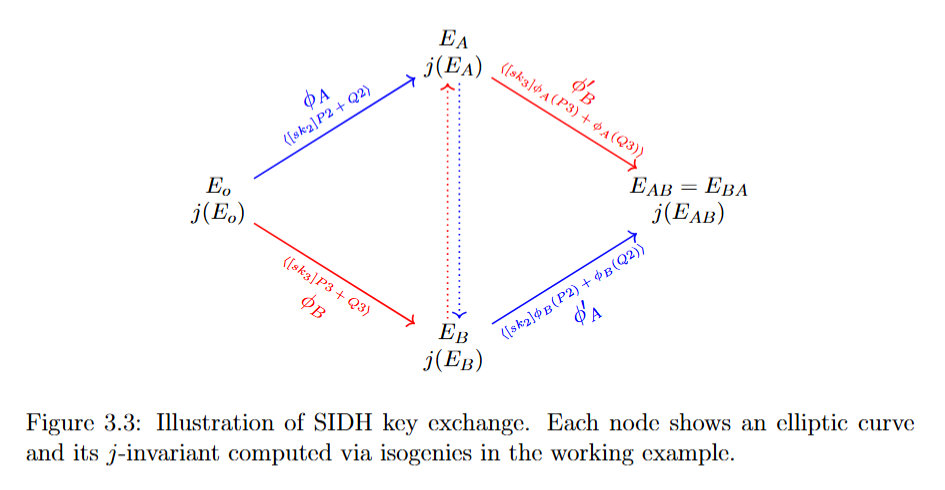
General Workflow of SIDH Protocol
The general workflow of the SIDH (Supersingular Isogeny Diffie–Hellman) protocol involves two users who wish to securely share a secret over an insecure channel. Each user selects a secret integer and uses it to compute a special mathematical map, called an isogeny, from a commonly known starting elliptic curve. This process transforms the curve into a new one, and the resulting curve, along with some helper information, is shared with the other user. These shared values do not reveal the secret but are enough for the other user to apply their own secret and derive the same final result.
Once both users receive each other’s shared data, they perform a similar mathematical process using their own secrets to reach a common curve, which leads to the generation of a shared secret key. This key can then be used to encrypt and decrypt messages securely. The strength of SIDH lies in the difficulty of reversing this process without knowing the original secrets, especially when dealing with quantum computers. This workflow ensures secure communication through deep mathematical operations rooted in the theory of elliptic curves.
My Project
Explore my work! Below is the first chapter of my complete project report. It provides the foundational background and sets the stage for understanding the purpose and direction of the work. The complete cryptographic algorithm has been implemented using Maple, a powerful tool for symbolic computation and mathematical programming. Additionally, the entire project report and presentation has been carefully prepared and formatted using LaTeX to ensure clarity, consistency, and professional presentation.
Get in-depth understanding by reading my project report.
See more
Get a quick overview of my BS final year project.
See more
Get deeper understanding of Implementation of SIDH using Maple.
See more
Go back
Go back
Go back
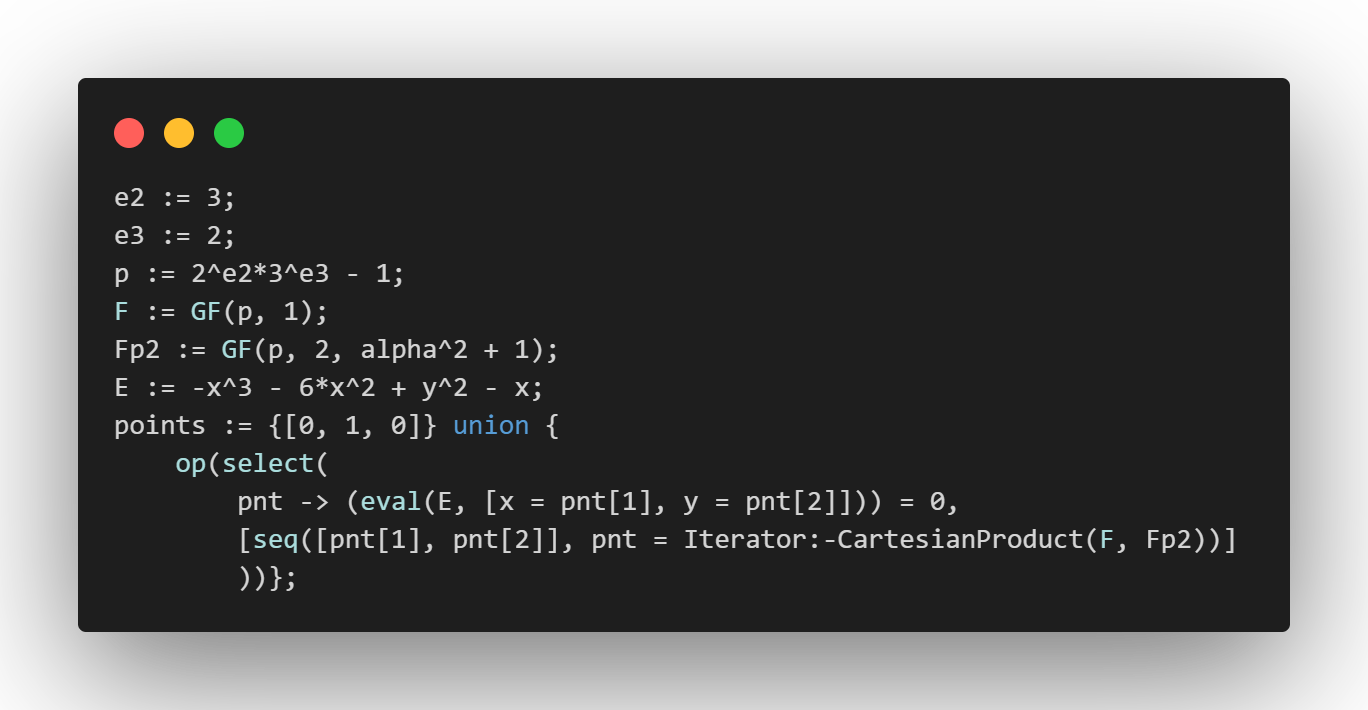
Defining elliptic curve
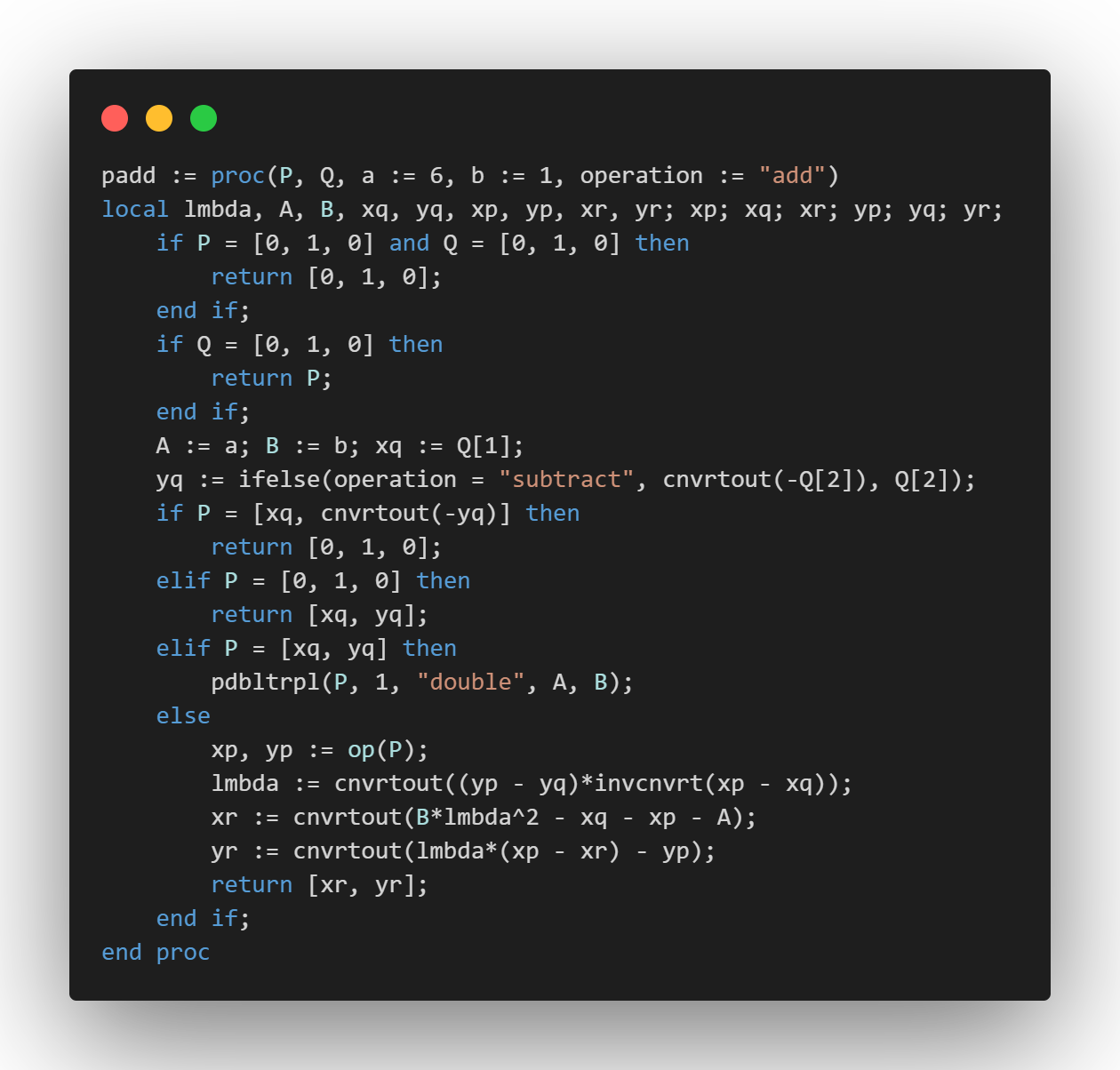
Addition and subtraction of points on elliptic curve
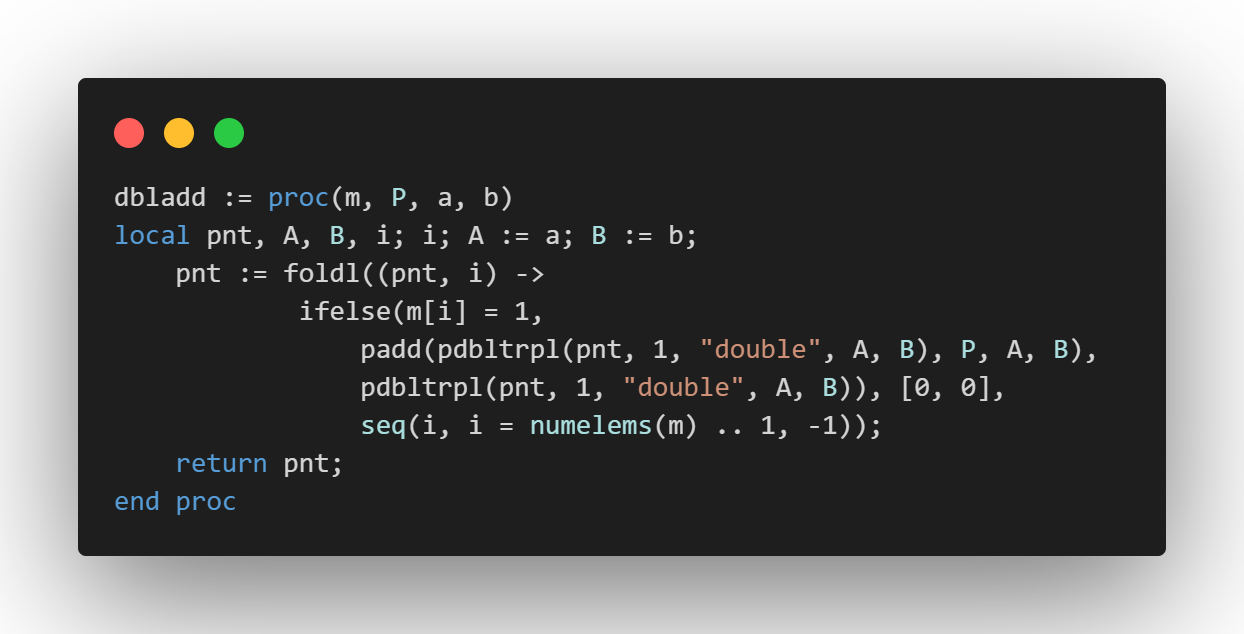
Scalar Multiplication of points on elliptic curve
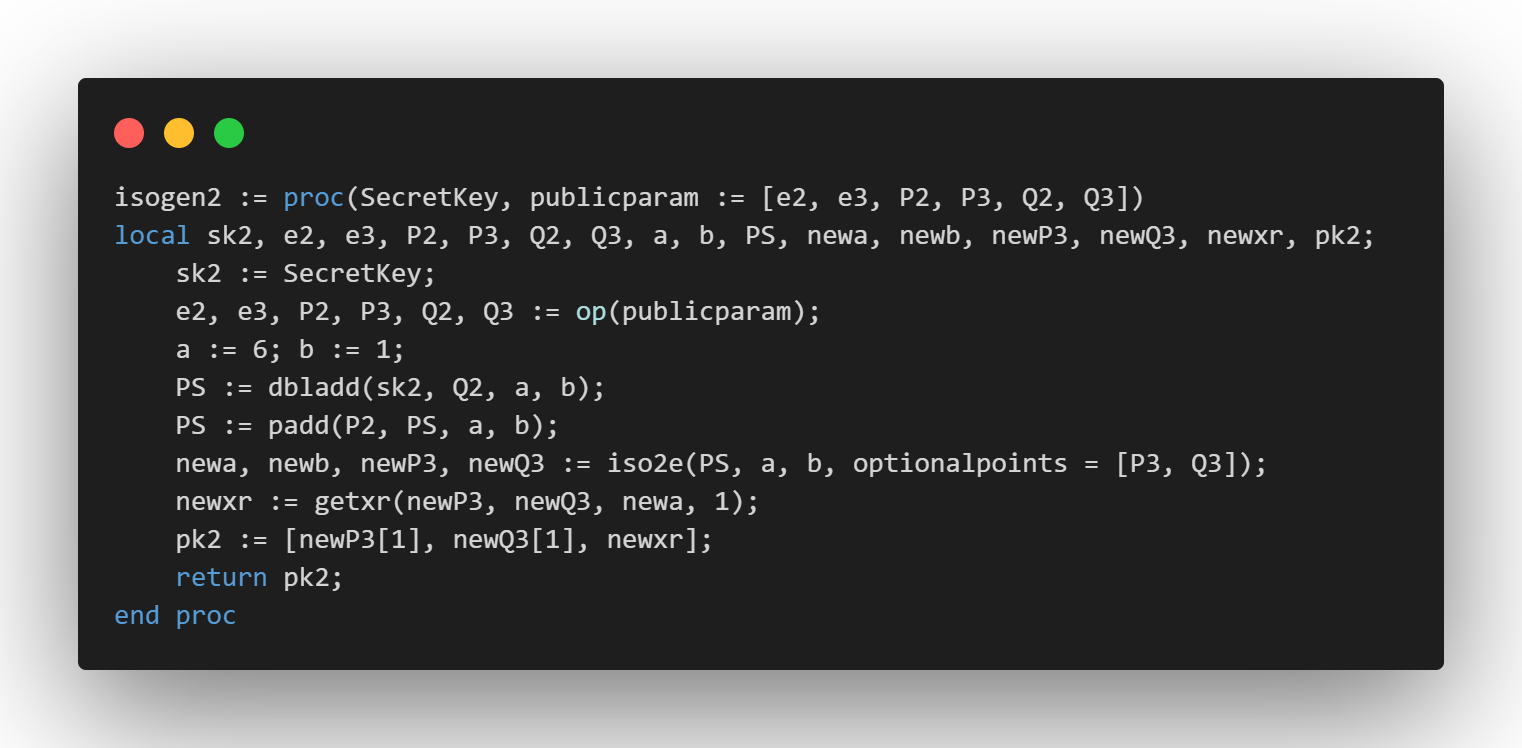
Degree 2-isogeny computaion
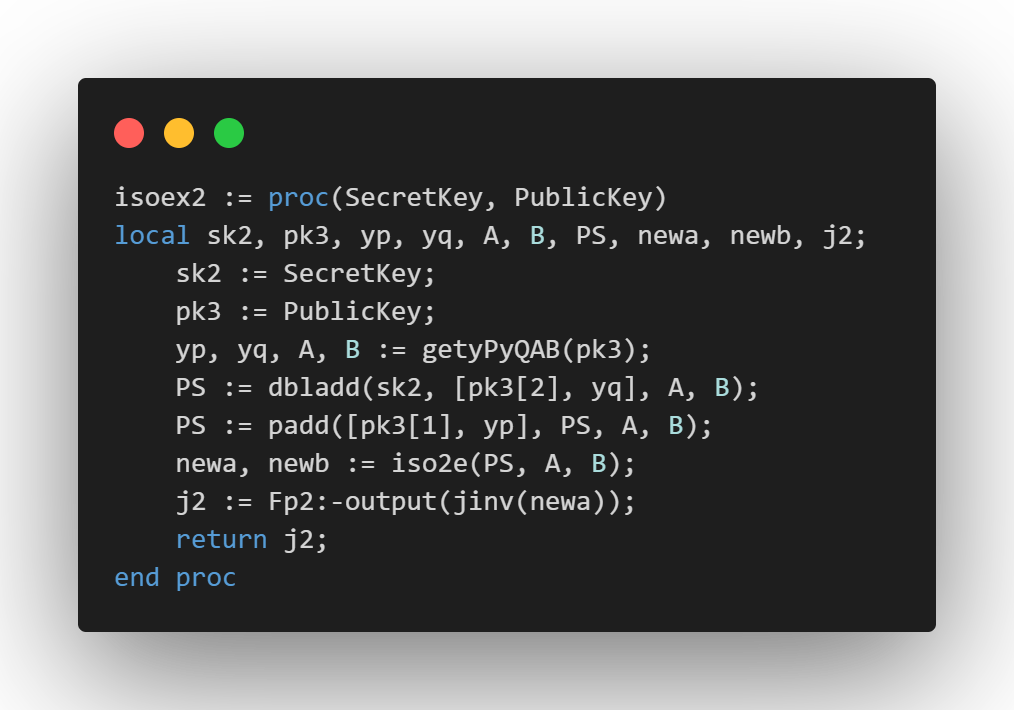
Shared Secret computation
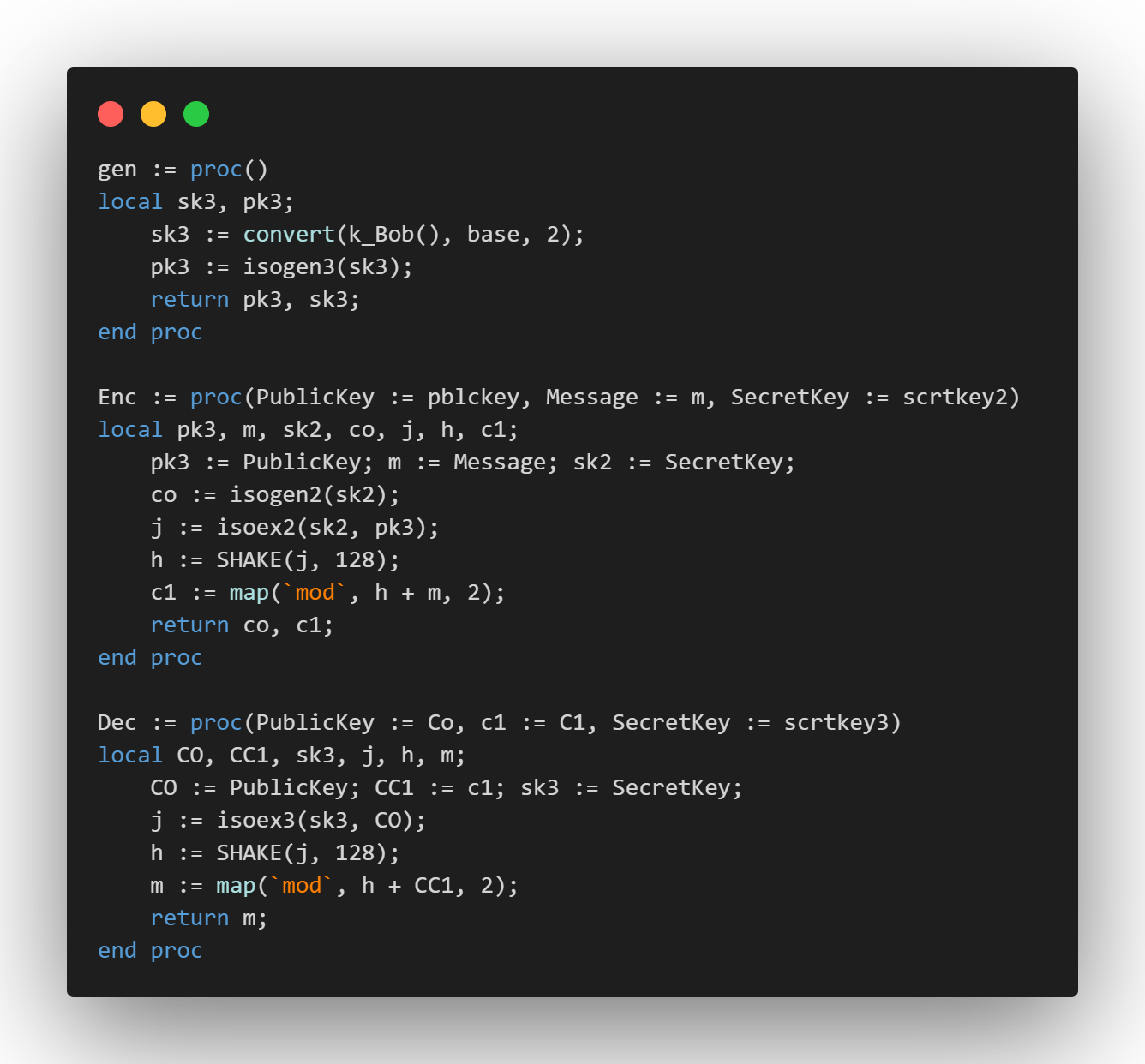
SIDH complete workflow